
The Zone: Fast Writing, Fun Storytelling
Imagine you’ve got a few months to go from a really raw story idea for a middle grade or young adult novel to a polished draft for editor review. Are you thinking, “No way!” or are you in the “let’s do this!” camp?
This is often the scenario for authors taking on work-for-hire projects. Sometimes these are called commissioned works, or an IP (intellectual property) project. I’ve completed nine such projects, with a new middle grade novel coming out this January. It’s called The Zone and was commissioned by publisher North Star Editions for its Jolly Fish Press imprint.
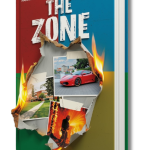
The book page is now live and I just received the cover image!
Since novels, even for youth, can take many months or even years to develop, I thought some people would like an inside peek at how I’ve learned to tackle fast story development and fast writing. Unless you’ve tackled these types of projects, it’s all a bit mysterious. Or even if you have, it’s helpful to exchange how-to details with each other.
About Work-for-Hire
A few points I want to make first:
- Work-for-hire is not a process for everyone. The time pressure is real, even with lower word counts (The Zone needed to be about 20,000 words). I have a full-time day job and many family responsibilities. And I have other writing projects in motion. But I trained and worked as a newspaper reporter back in the day and I find comfort when operating in this mode again (for a bit).
- The focus remains on quality story-telling and engaging content.
- Many work-for-hire writers, myself included, also develop our own stories for submission to agents or editors. This is how we experiment with different structures, storytelling approaches and perhaps bring in a different voice and perspective than our work-for-hire books.
The Timeline
Here are major touch points for how I brought the idea to life for The Zone during a fast writing period.
May 9, 2025 – I got a request for middle grade hi-lo story pitches from the North Star editor I’d already worked with on two other teen novels, Firebreak and Walking on Eggshells. Pitch and plot outline deadline: four weeks. Book deadline if the project was greenlighted: Nov. 3, 2025.
I spent a few days looking through a file where I keep very rough story ideas organized by fiction or nonfiction, picture book, middle grade or young adult. I looked for:
- Which ideas fit the general criteria expressed by the editor.
- Whether the topic feels relevant and interesting enough to the targeted readers.
- How much research would be required.
- Whether I could imagine spending an intense period immersed in the topic.
From this, I did some online research and noodled on it all before landing on two story ideas, one for full development and one as a backup.
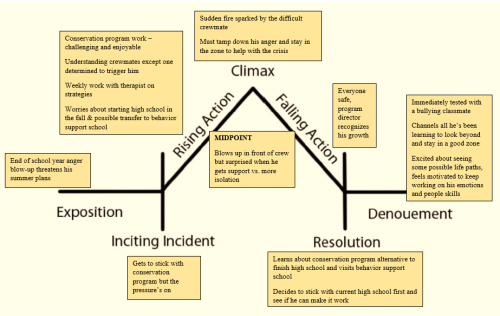
Rest of May 2025 – I’ve learned the value of starting a new book project by crafting the pitch first. I worked on this and also set up a plot structure file to think through the story, including the turning point, midpoint and climax. I find it valuable to reference story development tools such as Save the Cat and modern inspirations of Freytag’s Pyramid. These helped me draft a chapter-by-chapter outline. Not lying – this is an intense month of development work. I also wrote a pitch for the backup idea.
May 30, 2025 – I submitted my story ideas and plot outline for the lead idea.
June 30, 2025 – One month later, I received the good news that my project was approved.
July-October – Writing time! And more research. This is when I fully developed all layers of the story. The characters. The plot. The world. The tone and feeling of the story. And, in this case, language that will make it an interesting story but also accessible to the intended readers.
Tools I found helpful during this stage:
- A writing schedule.
- A spreadsheet of the chapters that keeps me straight on the story’s timeline, critical actions, word count and reading level.
- A Pinterest board with images grounding me in the setting and key plot points.
- A online image tool that helps me create sketches bringing my characters to life that I reference while writing. I’ve posted these sketches on the book page.
My publisher asks its authors to use this ATOS readability analyzer tool for hi-lo books. I checked the reading level of each chapter as I went, but I then ran the entire manuscript through at the end to get a more accurate assessment. This helped me refine further.
October 24, 2025 – I turned in my polished manuscript.
Dec. 30, 2025 – Two months later, I received revision notes from my editor, with a request to send back the revised story by Feb. 2, 2026 at the latest.
Jan. 13, 2026 – I sent in the revised story.
Feb. 9, 2026 – My editor emailed that the revisions were accepted and I was done.
So, the whole project took about nine months. That included about six active months of work on The Zone between developing my story pitch and outline, researching and writing the actual book, and then doing one revision round.
Joys and Challenges
Challenges I faced during my fast writing of The Zone:
- Continuity – this can sneak up on novelist and it’s why I now use a spreadsheet. But even with this tool, I found myself revising to make it clearer how the story timeline and key activities logically unfolded during one summer.
- Hard to take a break – if you’re not under contract for the novel you’re writing, you can push pause to come up for air and get some distance from the story. Or run it by critique partners. Not easy to do with a work-for-hire book on a deadline.
The joys?
- As with the crafting of any story regardless of the publishing path, there is great satisfaction in seeing a rough idea come to life. The characters always surprise me and force changes in how I originally envisioned things unfolding.
- Each work-for-hire book matures me as a writer and storyteller.
- Reader feedback. This can be nerve-wracking, of course, since no story lands the same with every reader. But when I read a review or get a message from a reader who relates to a character or enjoyed the plot in some way, that really does put gas in the tank.
I’m proud of The Zone. I look forward to it reaching teens who can enjoy and take hope from this book once it’s launched into the world in 2027!